
Evenings can feel heavy, but a simple relaxation ritual gives your brain clear cues to unwind. Dim lights, device-free time, a warm drink, and a gentle stretch can steady your body and calm racing thoughts, lowering cortisol and nudging melatonin up. Those small, predictable steps don’t just feel soothing—they build resilience over time, making transitions smoother even on busy days. If you want to reclaim calmer evenings, you’ll find the pattern surprisingly practical—and you’ll know why it works.
Key Points
- Rituals provide predictable cues that tell the brain it’s time to relax, reducing rumination.
- Consistent wind-down routines lower stress responses and support calmer arousal levels.
- Dim lights, away from devices, and gentle activity reduce stimulation, aiding sleep readiness.
- Small, sustainable steps (stretching, warm drink) gradually lower cortisol and boost melatonin.
- A stable evening routine improves mood and resilience for the next day by creating a controllable environment.
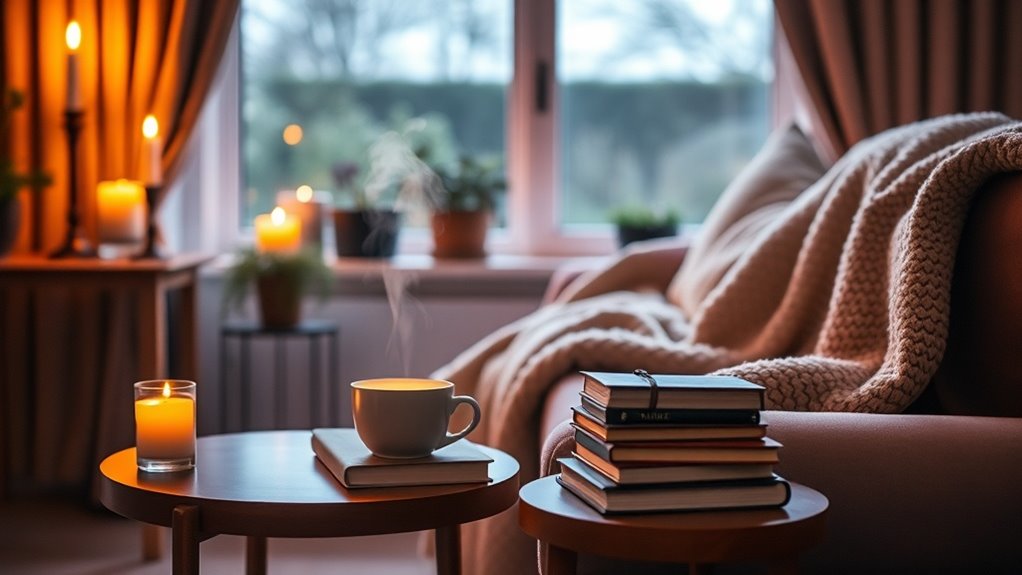
Unwind after a long day with simple, evidence-based rituals that signal your brain it’s time to relax. You’re not alone if evenings feel unsettled; many people notice a shift in mood or energy once the sun goes down. The idea behind a relaxation ritual is simple: you create predictable cues that tell your nervous system, “Hey, we’re winding down.” When these cues are reliable, you spend less time ruminating and more time restoring. Over time, this consistency can reduce the intensity of stress responses, making the evening feel more controllable rather than overwhelmed.
Unwind with simple, reliable rituals that tell your brain it’s time to relax.
A practical distinction matters here: a plan isn’t a rigid schedule or a checklist that adds pressure. It’s a modest sequence you trust. An effective evening routine focuses on what you can reasonably perform every day, so it remains sustainable. Start with small, accessible steps—dim lights, put away devices, sip a warm drink, or stretch for five minutes. Each action compounds, signaling your body to ease muscle tension and lower heart rate, which supports a smoother transition to sleep. The science is straightforward: gradual arousal reduction lowers cortisol and nudges melatonin release, aligning your internal clock with a calmer state.
You’ll likely notice that the ritual pays dividends beyond sleep. With consistent practice, stress management becomes less reactive and more proactive. When a surprise task or conflict arises, your baseline remains steadier because your nervous system isn’t starting from a heightened baseline every night. In that sense, the ritual doubles as a mental hygiene practice: it cultivates a reliable environment where you can process the day, without reactivating every setback.
Clarity comes from simplicity. Choose one or two non-stimulating activities that feel restorative rather than entertaining. For many, that means gentle movement, a brief breathing exercise, or quiet reading. Pairing these activities with a consistent time helps your body learn the signal faster. If you’re juggling family, work, or caregiving, keep the routine flexible—consistency matters more than perfection. Even on busy evenings, a five-minute wind-down can reset your brain enough to protect sleep quality and mood for the next day.
The social angle matters, too. If you share your evenings with others, explain your aim: a moment of quiet to settle thoughts and lower stress. You’ll reduce friction and invite cooperation, turning a personal ritual into a shared norm that supports everyone’s stress management. Ultimately, the reason some evenings feel easier with a relaxation ritual is not novelty but predictability. Your brain learns to anticipate relief, guiding your body toward rest and restoration, one calm moment at a time.
Frequently Asked Questions
How Long Should a Relaxation Ritual Last?
A relaxation ritual should last about 10 to 20 minutes. If you’re short on time, even 5 minutes can help. Research shows brief routines can lower arousal and improve sleep onset for many people. Your routine might include a calming breath and a nighttime stretch to ease tension before bed. You’ll likely feel steadier after consistent practice. Keep it steady, gentle, and feel free to adjust duration to what fits your evening best.
Can I Multitask During a Ritual?
Yes, you can multitask during a ritual, but keep it minimal. Aim for one action that doesn’t disrupt the calm breath you’re focusing on, like dimming lights or sipping water. Prioritize activities that won’t spike stress. Use soft lighting and your calm breath to anchor attention when you return. If multitasking feels distracting, pause and simplify. This approach aligns with evidence on attention and stress reduction, supporting easier evenings.
Do Rituals Require Special Products or Equipment?
Rituals don’t require fancy gear; you can start with simple, calming scents and your own breath. You don’t need special products—consistency and intention matter more than equipment. If you use calming scents, keep them subtle and non-irritating. Practice breathwork basics: slow inhales, gentle exhales, steady rhythm. You can multitask, but give yourself a calm cue. It’s about creating a predictable pause, not a performance, supported by science and your own体验.
Do Rituals Work for Insomnia Types?
Yes, rituals can help insomnia subtype differently, but benefits vary. You may notice improved sleep latency with consistent routines, though ritual efficacy depends on factors like sleep environment and stress management. If your insomnia subtype involves racing thoughts or body tension, targeted wind-downs can be especially helpful. Combine predictable cues with evidence-based habits, track what works, and adjust. If sleep doesn’t improve, seek professional guidance to tailor strategies for you.
How Often Should I Practice a Ritual?
Most people benefit from practicing a ritual 3–5 times per week, or nearly every night, to reinforce signals that it’s wind-down time. About 60% report better sleep when routines are regular. You should start with 10–15 minutes and adjust as needed. Try calm breathing during the routine and gentle stretching afterward to reduce tension. Consistency matters more than duration, so find a schedule you can sustain and listen to how your body responds.