
A common case is someone swapping a late-night cookie for a small relaxation gummy to wind down without extra calories. You might find that these bites offer a predictable routine, modest calm from ingredients like L-theanine, melatonin, or magnesium, and fewer caffeine or sugar spikes. That balance can curb late-evening overeating while supporting sleep goals, but it also raises questions about how to use them as a bridge rather than a replacement for essential nutrients.
Key Points
- They provide a calm, pre-sleep cue with fewer calories and no caffeine, supporting a smoother wind-down.
- Pre-measured gummies help manage portions and prevent late-night overeating.
- Aligning with sleep science, they target latency and continuity without heavy meals.
- Gentle ingredients like L-theanine or magnesium offer relaxing effects without strong sedatives.
- They act within a broader sleep-hygiene plan, not as a meal replacement or solution alone.
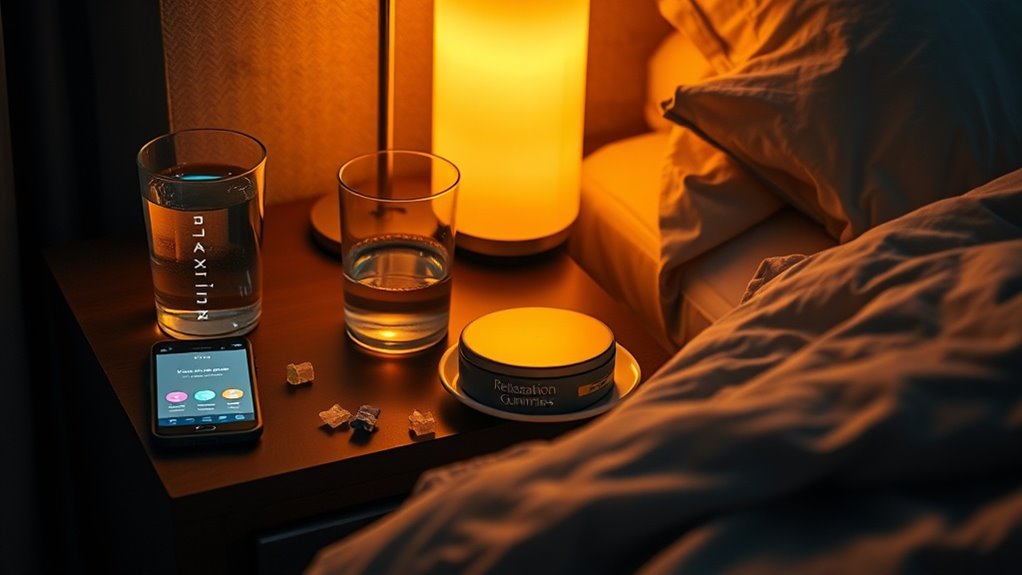
Nighttime snacks with relaxation gummies are a popular way to wind down, but you’ll want to choose options that support restful sleep rather than disrupt it. You’re not alone if you reach for a chewable before bed, yet the science behind why some people swap traditional snacks for gummies matters. The trend rests on the idea that targeted ingredients can cue calm without heavy calories or caffeine. In practice, mindful snacking means you’re aware of how the bite fits your sleep goals, not just your taste buds. Sleep science shows that what you eat in the hours leading up to sleep can influence latency, continuity, and overall sleep quality. When you pick gummies, you’re prioritizing simplicity and consistency over complex meals that might spike energy or cause discomfort.
Many swaps happen because relaxation gummies promise a predictable routine. If you’re trying to reduce late-night overeating, a small, pre-measured gummy can help contain portions and prevent overeating that often accompanies larger snacks. Yet you still need to assess the ingredients. Ingredients like melatonin, L-theanine, magnesium, or botanicals claim to ease sleep, but the evidence varies. Melatonin can aid circadian alignment for certain individuals, but timing matters: taking it too late can shift your sleep phase unfavorably. L-theanine and magnesium have subtler effects, sometimes improving perceived relaxation without altering actual sleep architecture in robust, healthy sleepers. The key is to match your expectations with what the sleep science literature actually supports.
If you’re embracing relaxation gummies, track how you feel. Do you fall asleep faster, or do you wake during the night? Do you awaken refreshed, or groggy? This isn’t about guilt or rigidity; it’s about data-driven adjustments. Mindful snacking invites you to question hunger cues, appetite signals, and whether a gummy satisfies a craving without triggering a late-night sugar spike. Prefer formulations with minimal added sugars and non-frightful caloric load. The best options align with a modest bedtime window and don’t replace meals or essential nutrients.
For many, gummies serve as a bridge to better sleep hygiene rather than a cure-all. They’re most effective when integrated with a consistent bedtime, a dark and cool room, and limited screen exposure before bed. If you rely on sleep science to guide choices, you’ll recognize that the proof is strongest for habits that consistently support sleep onset and maintenance.
Frequently Asked Questions
Are There Any Side Effects From Nightly Relaxation Gummies?
Yes, there can be side effects from nightly relaxation gummies. You might notice drowsiness, headaches, or digestive upset, especially if you mix them with alcohol or sedatives. Some formulations rely on herbal or non-GABA ingredients, so benefits of non GABA sleep aids vary, and potential placebo effects can influence perceived improvement. Start with a low dose, monitor your response, and talk to a clinician if you have liver or kidney issues or you’re pregnant or breastfeeding.
Do Gummies Replace All Nighttime Snacks Completely?
Are gummies replacing snacks? Not for everyone; they’re not a complete snack substitute. You might use them as a sleep aid, but most people still need balanced nourishment. Evidence suggests gummies can modestly support relaxation or sleep when used as directed, not as sole nutrition. Consider overall diet, sleep habits, and medical advice. Are gummies replacing snacks, sleep aid? They can help with sleep cues, yet won’t replace all nighttime eating. Use them thoughtfully.
How Long Before Bed Should I Take Them?
Short answer: timing matters. If you’re using relaxation gummies, start about 30 to 60 minutes before bed; avoid closer than 30 minutes to sleep. Research suggests calming effects don’t reliably shift sleep duration unless timing aligns with your body’s cues. Consider dosage versus sleep duration: higher doses may help drowsiness but can extend sleep latency for some. Individual response varies, so test patiently, monitor effects, and don’t exceed label recommendations. Always consult a clinician if you have concerns.
Can Children Safely Use Relaxation Gummies for Sleep?
You should not give relaxation gummies to children. The consequences for children can include drowsiness, impaired coordination, or interactions with other meds. Always consult a pediatrician before use. There’s no established safety profile or dosing guidelines for kids, and uncontrolled access increases risk. If a clinician approves, follow strict dosage guidelines and monitor for side effects. For younger children, non-drug sleep strategies are safer bets until a professional confirms suitability.
Do Gummies Affect Dreams or REM Sleep?
Sleep changes from gummies can happen, but evidence is limited. Some users report dream interference or lighter REM, while others feel no difference. A notable statistic: up to 20% of adults report altered sleep after non-prescription supplements. In your case, gummy sleep effects vary by ingredient and dose, so monitor your patterns. If dreams become disruptive, reconsider use or adjust timing. If you’re pregnant or on meds, consult a clinician.