
Like a quiet pause between notes, this quick routine helps you center yourself in minutes. You start with a single intentional breath—inhale through your nose for four, exhale for six, twice—then gently scan from head to toe, noticing tension without judgment and inviting a softer exhale into tight spots. Pick one practical task, set a 15-minute timer, and keep a steady pace. End with gratitude and a brief reset if needed, and you’ll feel ready for what comes next.
Key Points
- Start with a single intentional breath: inhale through the nose for 4, exhale for 6, twice, with eyes open or closed.
- Do a brief body scan from head to toes, noting tension and inviting a softer exhale toward tight spots.
- Choose one pragmatic action and set a 15-minute timer to complete a clear, manageable task.
- Recheck breathing during decisions, keeping inhale steady and exhale controlled, pausing briefly if surprises occur.
- End by naming one thing you’re grateful for and proceed with a focused, purposeful next step.
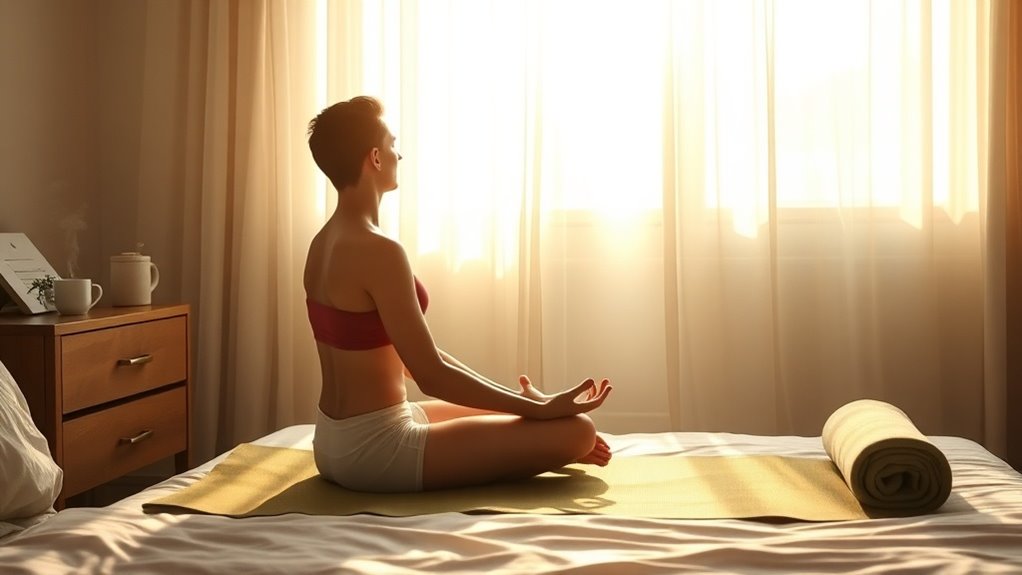
Ever feel overwhelmed by the day’s to‑dos or pulled in too many directions? You’re not alone. When life feels loud, a quick routine can bring you back to center without dragging your energy down. This simple practice fits into a busy moment and pays off with steadier focus, steadier breath, and a lighter mind. You’ll learn to pause, reset, and carry momentum with intention rather than force.
Begin with a single, intentional breath. inhale through your nose for a count of four, then exhale slowly for a count of six. This breathing cadence signals your nervous system to shift from hurry to presence. Do it twice, eyes open or closed, whichever helps you feel grounded. Notice the air moving, the shoulders softening, the jaw releasing. This first breath is a bridge between distraction and stillness.
Begin with a single, intentional breath to bridge distraction and stillness.
Next, bring your attention to a brief body scan. Start at the top of your head and slowly move downward, noting any areas of tension or heat without judgment. If you find tightness in your jaw, shoulders, or belly, acknowledge it and invite a softer exhale toward those spots. If you catch yourself wandering, gently guide your focus back to the sensation you’re sensing. The goal isn’t to fix everything at once, just to observe and return.
With your body anchored, identify one pragmatic action you can take right now. It could be writing a single task on a notepad, setting a timer for 15 minutes, or choosing one priority to complete before you move on. Keeping this choice small helps you reclaim agency without fueling overwhelm. As you decide, recheck your breathing cadence: a calm inhale, a controlled exhale, steady and unhurried. This pairing reinforces clarity and momentum.
If surprises pull you off balance, pause again for a short reset. Three breath cycles—inhale for four, exhale for six—create a quick anchor. Let shoulders drop, jaw unclench, and eyes soften. Acknowledge that you’re choosing presence over pressure, then proceed with your selected action. Consistency is your ally; even on crowded days, short resets accumulate into a steadier rhythm.
End your routine by noting one thing you’re grateful for in the moment. Gratitude doesn’t erase stress, but it shifts attention toward what’s manageable and real. You’ll notice that a few minutes of deliberate breathing, mindful observation, and a concrete next step can transform lingering tension into doable progress. Keep this sequence compact: breathe, scan, decide, reset, and acknowledge. In time, you’ll tap into a persistent center that travels with you, turning friction into focus and pressure into purpose.
Frequently Asked Questions
How Long Should I Practice This Routine Daily?
Aim for about 10 to 15 minutes daily. You’ll get steady benefits if you practice consistently, even on busy days. Start with a focused two word ideas, then move into breathing and short pauses. If you miss a day, don’t beat yourself up—just show up again tomorrow. The practice duration should feel doable, not draining. Gradually extend only when you’re enjoying it, not out of obligation, and you’ll keep momentum without overwhelm.
Can I Do It While Standing or Only Sitting?
Yes, you can do it while standing. Start with a tall spine to support standing balance, then inhale to relax shoulders. If it helps, tap into a posture cue like lifting the crown of your head. Keep feet hip‑width apart for stability, knees soft. You’ll feel steadier as you breathe—even through brief pauses. If balance wobbles, switch to sitting for a moment, then return standing. Your choice, your comfort, your pace.
Does This Help With Anxiety or Sleep?
Yes, it can help with both anxiety and sleep. Think of your breath as a calm harbor where worries float away. You’ll feel a calming breath slow your racing thoughts, and gentle stretches loosen tension your body stores. You can do it standing or sitting—whatever fits. Practice regularly, especially before bed, and notice steadier nerves and easier drifting into sleep. You got this.
What if I’M Short on Time, Can I Skip Steps?
Yes, you can skip steps when you’re pressed for time. Focus on tiny rituals and a quick breath to anchor you in the moment. Do a 30-second desaturation inhale, a slow exhale, then a single, calm pause. If that feels too short, repeat once. You’ll still gain reset benefits, even with fewer steps. The key is consistency: a small, doable ritual beats nothing, and it travels with you.
Is It Suitable for Kids or Beginners Only?
Yes, it’s suitable for beginners and kids with supervision. You’ll find the steps simple, gentle, and easy to follow, so you can start right away. If you’re teaching, model slow breathing and short holds, then adjust as needed. You don’t need fancy gear—just a quiet space and a timer. If a step feels off, skip it and try the next. Stay patient, listen to your body, and progress at your own pace.