
You may not realize that relaxation gummies can shift your baseline before a social event, not just blunt nerves in the moment. You likely feel calmer, but the effect depends on dose, product quality, and your own chemistry. When used with deliberate breathing and pacing, they can support steadier conversations and reduced sensory overload—yet they may also dull perception or slow responses if overused. The balance matters, and what works for you might be different from someone else.
Key Points
- They may provide immediate calming sensations, reducing anticipatory anxiety before social events.
- Effects depend on ingredients, dosage, and individual physiology, making outcomes variable.
- Cannabinoids and botanicals can influence arousal, potentially dulling sensory overload for some people.
- Breathing techniques can complement gummies, offering quick, controllable arousal management.
- Safe use involves testing doses in low-stakes settings and considering interactions with alcohol or medications.
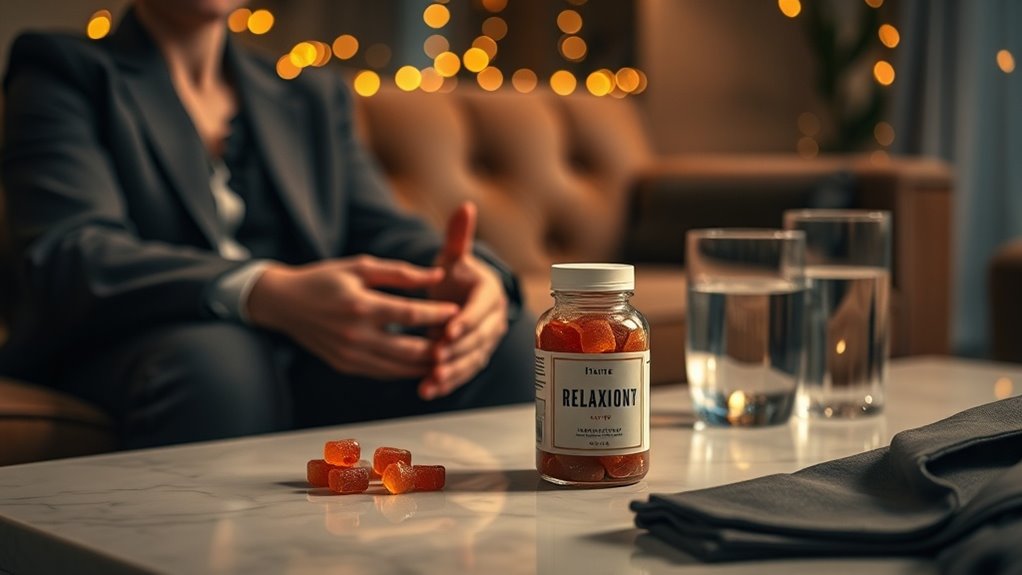
If you struggle with social anxiety before events, relaxation gummies might seem like a convenient option, but their effects can vary widely. You may notice immediate calming sensations, yet the degree and duration depend on ingredients, dosage, and individual physiology. Evidence suggests cannabinoids and other botanicals can influence arousal, but results are inconsistent across people and contexts. You’ll rarely find a guaranteed, reliable outcome for complex social scenarios, so approach with measured expectations and a clear plan.
Breathing techniques can complement or even substitute for short-term buffering, especially when you anticipate a crowded room. Slow, diaphragmatic breathing lowers physiological arousal and can help you regain a sense of control before you enter a venue. Practice a simple pattern—inhale for four, exhale for six or eight—so you’re ready if you start to feel overwhelmed. Pair breathing with awareness of crowd dynamics: observe how people orient themselves, where conversations cluster, and which spaces feel most motion-silent or stimulating. This awareness doesn’t erase nerves, but it provides a navigable framework to reduce sensory overload.
Sensory overload is a common mechanism driving anxiety in social settings. Gummies might blunt arousal for some individuals, yet they can also dull perception, blur boundaries, or impair quick, adaptive responses. If you notice muffled speech, slowed reaction times, or difficulty filtering irrelevant stimuli, reassess whether to rely on a product for the event. In high-stimulation environments like concerts or networking mixers, maintaining a modulated attention to environmental cues is essential for safe and comfortable participation. A practical approach is to test doses in low-stakes settings first, documenting effects on attention, balance, and conversational clarity.
Social confidence often hinges on predictability and rehearsal. Gummies can create a window of reduced anticipatory tension, but they rarely substitute for practiced skills. You benefit from combining short, targeted coping strategies with a realistic plan for social engagement. Consider rehearsing openings, questions, and boundaries with trusted friends or in front of a mirror. If you choose to use gummies, time them so their peak aligns with when you’ll need steadier nerves, not during the most intense social moments where impairment would disrupt conversation and safety.
Medical context matters: interactions with alcohol, other sedatives, or medications can amplify risks. Always review ingredients, dosage, and contraindications with a clinician, especially if you have cardiovascular, hepatic, or psychiatric considerations. If you decide to experiment, start with a conservative dose and monitor effects on cognition, coordination, and mood. In essence, relaxation gummies may offer a conditional, situational aid, but they aren’t a universal solution. Plan, practice, and pixelate your strategy with awareness of breathing techniques, crowd dynamics, sensory overload, and social confidence to optimize your experience and safety.
Frequently Asked Questions
Do Relaxation Gummies Cause Drowsiness the Next Day?
Relaxation gummies can cause drowsiness for some people, but it often depends on dosage and ingredients. Next-day sedation is possible if you take higher amounts or employ sleep-inducing components. Start with a low dose to gauge your tolerance. Consider safety considerations like interactions with other meds and underlying conditions. If you notice lingering sedation, avoid driving or operating machinery. Evidence-based notes suggest gradual effects and variability; monitor how you respond and consult a clinician if concerns persist.
Are They Safe for Teens or Pregnant Individuals?
They’re not recommended for teens or pregnant individuals due to limited safety data and potential effects on development. You should approach with caution, prioritizing calmness before events, and consult a clinician before use. Image a careful, clinical checklist: ingredients, possible interactions, and labeling for age or pregnancy. The safety considerations emphasize avoiding routine use, monitoring for side effects, and recognizing that effectiveness varies. If in doubt, skip them and seek evidence-based alternatives.
How Long Before Events Should I Take Them?
You should plan to take them about 30 to 60 minutes before the event. Timing considerations indicate onset expectations can vary by product and individual, so start with a small amount and wait before increasing. If you’re new to relaxation gummies, test them at home first to gauge effects. Avoid driving or operating machinery until you know how you respond, and don’t mix with alcohol or other sedatives. Seek medical advice if you have health concerns.
Do They Interact With Alcohol or Caffeine?
No, they can interact with alcohol and caffeine, potentially enhancing drowsiness or causing dizziness. If you choose to use them, monitor effects and avoid mixing with high-alcohol intake. Be mindful of caffeine’s stimulant, which may offset calm effects. From an evidence-based, clinical perspective, consider calm focused strategies and safety considerations, and consult a clinician if you have underlying conditions or take sedatives. Use cautiously, and prioritize your safety and well-being.
Can They Replace Practicing Social Skills or Therapy?
No, they can’t replace practicing social skills or therapy. You should view relaxation gummies as a supplementary tool for anxiety management, not a substitute for evidence-based treatment. Rely on structured social practice and, if needed, clinician-guided therapy to build skills. Use them cautiously and discuss interactions with alcohol or caffeine with a professional. Maintain realistic expectations, monitor effects, and integrate vitamins or supplements only when supported by clinical guidance.