
You can start with a simple, equipment-free routine that aims to lower arousal before sleep. Begin with a soothing breath—inhale through the nose for four counts, exhale for six—to activate the parasympathetic system. Then do a brief muscle awareness scan and a progressive relaxation from the eyes toward the feet, easing tension with each exhale. A quick cognitive cue helps you commit to this nightly habit, lasting about five to ten minutes, and you’ll notice the pattern forming—if you stay with it, more calm may follow.
Key Points
- A simple nightly pause uses a calming breath pattern to activate the parasympathetic system and soften shoulders and jaw.
- A brief body scan helps identify lingering tension, guiding softening on the exhale without judgment.
- Progressive muscle relaxation creates gentle tension and release across major muscle groups to release built-up stress.
- The routine includes a concise cognitive shift: recognizing rest as a voluntary nightly practice to lower arousal.
- Consistency for 5–10 minutes forms a conditioned relaxation response and improves ease of sleep over time.
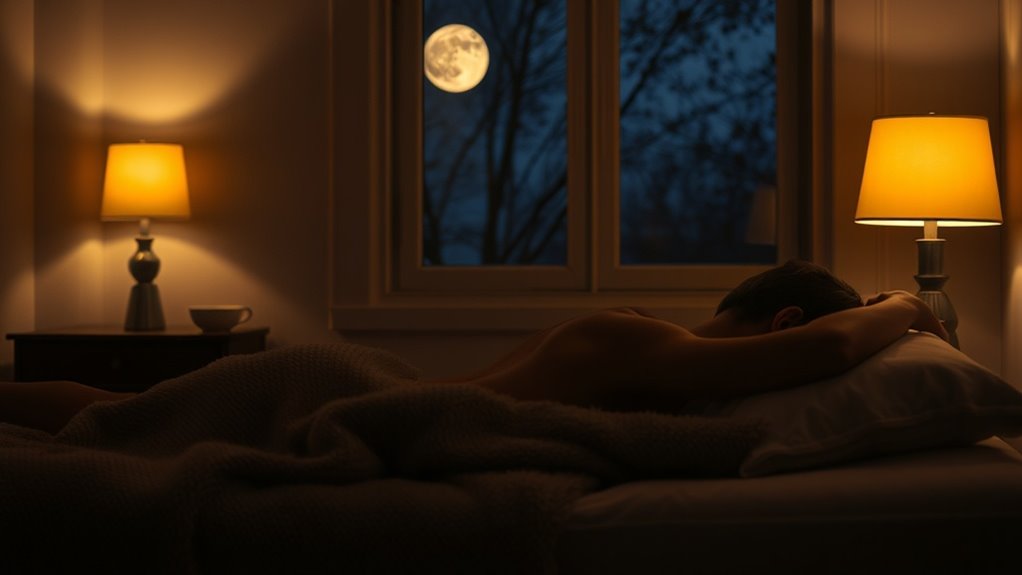
Could a simple nightly pause help release lingering tension? Yes, and you’ll see why in a few small, deliberate steps. The concept rests on basic physiology: tension accumulates in muscles, breath often shortens under stress, and a calm, targeted routine can interrupt this cycle. You’ll engage a brief, structured pause that relies on your body’s natural relaxation mechanisms, without requiring specialized equipment or extensive time.
Begin with a soothing breath. Inhale slowly through your nose for a count of four, then exhale for a count of six. This longer exhale activates the parasympathetic nervous system, dampening the fight-or-flight response that perpetuates muscle tightness. You should notice your shoulders softening and your jaw releasing minor clenching after several cycles. Keep the focus on the exhale, letting it guide your body toward quiet. This is not a meditation marathon; it’s a concise, evidence-informed breathing pattern you can repeat nightly.
Next, cultivate muscle awareness. Lie down or sit comfortably, close your eyes if possible, and scan from head to toe. Notice any areas of persistent tension—jaw, neck, shoulders, back, hips, legs. You’re not judging them; you’re identifying where muscle activity remains. As you observe, soften each area on the next exhale. Acknowledge the tension without forcing release. The aim is to increase tactile feedback about where stress concentrates, so you can address it directly in the following steps.
Turn attention to progressive relaxation, applying minimal intentional tension then releasing. Tense a muscle group for a brief moment, then completely relax it. Start with the eyes, then the forehead, jaw, neck, shoulders, arms, chest, abdomen, back, hips, thighs, calves, and feet. This deliberate contrast between contraction and release heightens proprioceptive awareness and can diminish residual muscle tone. You may experience a momentary pulse of warmth or a sense of relief as you release.
Integrate a brief cognitive shift. You’re validating rest as a voluntary practice, not a passive event. Remind yourself that this pause is a standard part of your nightly routine designed to lower arousal and improve sleep readiness. The routine should take about five to ten minutes. Consistency matters: repeating the sequence nightly strengthens its effectiveness through habit formation and conditioned relaxation responses.
Frequently Asked Questions
How Long Should I Practice the Nightly Pause Each Night?
How long you should practice the nightly pause depends on your schedule and goals, but start with 5–10 minutes per night. You can gradually extend as you feel comfortable, up to 20–30 minutes if it fits your routine. Consistency matters more than duration. Use slow, diaphragmatic breaths, release tension on exhale, and observe sensations without judgment. Track progress over weeks to assess benefits, adjusting duration to maintain steady practice and sustainable calm.
Can I Perform the Pause if I’M Not Tired?
Yes, you can perform the pause even if you’re not tired. Think of it like starting a car with a thumb on the ignition: you don’t need old fuel. Used regularly, it cultivates calm focus and supports smoother sleep onset. In a 10-minute session, you’ll likely experience reduced racing thoughts and slower breathing. If you’re alert, maintain gentle pace and short exhalations; avoid forced relaxation. Track progress, adjust duration, and stay consistent for best results.
Does It Help With Anxiety or Only Physical Tension?
Yes, it helps with both. For anxiety management, the nightly pause can lower arousal, promote cognitive control, and reduce rumination. For physical tension, you’ll likely notice muscle relaxation and improved breath—effects supported by relaxation-based mechanisms. It’s not a cure, but it complements broader strategies like mindfulness and sleep hygiene. Consistency matters, and you may pair it with brief stretching if tolerated. If anxiety persists, consider professional guidance.
Should I Pair It With Breathing Techniques or Music?
Breathing techniques and calming music can enhance a nightly pause. You should pair them if you’re aiming to reduce anxiety alongside physical tension. The juxtaposition of controlled breaths with soothing melodies creates a multisensory cue that lowers arousal more than either alone. Use diaphragmatic breathing and 4-6 cycle pacing, then add calming music at a low volume. Evidence supports combined interventions for relaxation, sleep onset, and perceived tension reduction. Monitor your response and adjust.
When Is It Best to Start This Routine?
You should start this routine about 30–60 minutes before bed. A consistent nightly pause promotes gradual tension release and signals your body to wind down, improving sleep onset. Begin with 5–10 minutes of light breathing, then add a brief body scan or progressive muscle relaxation. Avoid stimulating activities. If you notice lingering tension, extend the window to 15 minutes. Maintain daily practice to reinforce cues for nightly pause and sustained tension release.