
Like a dimmer switch in a quiet room, your nightly routine lowers the volume of restlessness. You start 30–60 minutes before bed with calming tasks, follow a four-by-four-by-six breathing cycle for five to seven minutes, and log perceived calm, breathing adherence, and lighting. Dim lights, limit screens, avoid late caffeine, and tweak tempo or brightness in small steps if benefits plateau, all while tracking overall sleep readiness to decide what to adjust next.
Key Points
- Establish a 30–60 minute wind-down window before bed with calming tasks to reduce stimulation and restlessness.
- Practice a calm breathing protocol: inhale 4, hold 4, exhale 6 for 5–7 minutes to improve parasympathetic engagement.
- Log perceived calmness before and after each session and track breathing consistency to identify trends.
- Use soft, dim lighting or warm lamps to minimize retinal stimulation and support melatonin production.
- Maintain routine consistency, limit caffeine and screens after mid-afternoon, and adjust tempo or lighting in small increments as needed.
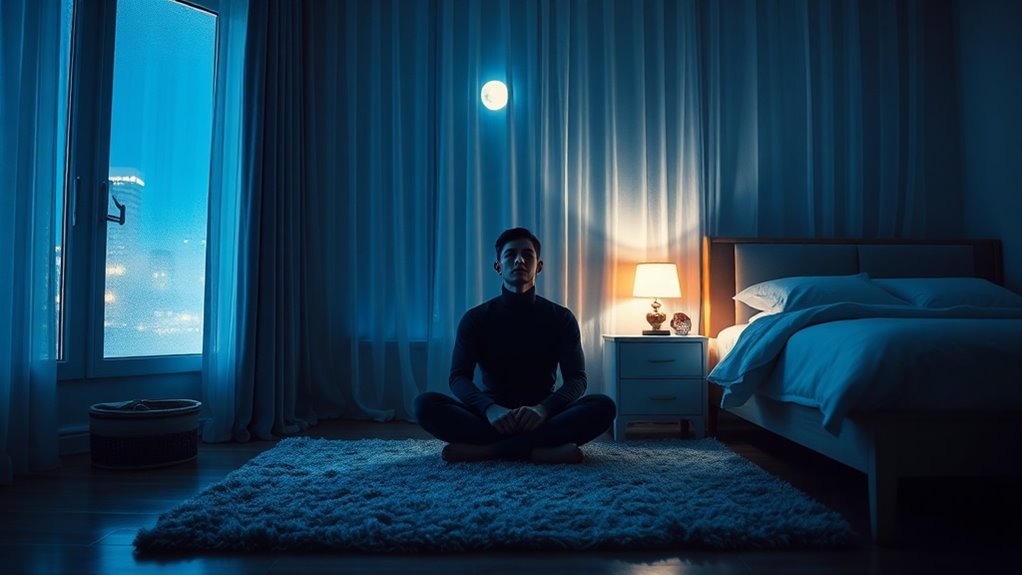
Many people wonder what nightly habits can calm a restless mind, and research suggests a simple routine can make a measurable difference. You’ll build a structured sequence that combines both physiological and environmental adjustments, and you’ll track outcomes to ensure clarity about what improves sleep. The core idea is to create a predictable, low-arousal environment that reduces cognitive load and sympathetic activation. In practice, you’ll begin by designing a consistent wind-down window, typically 30 to 60 minutes before bed, during which you limit stimulating stimuli and shift toward calming tasks. You’ll quantify baseline restlessness using a simple self-report scale, then monitor changes after implementing the routine.
Calm, structured wind-down routines reduce arousal and support clearer sleep.
A central component is calm breathing, performed with a slow, rhythmic pattern that targets autonomic balance. You’ll execute a controlled breathing cycle—inhale for four counts, hold for four, exhale for six—repeating for five to seven minutes. This protocol aligns with established findings on heart rate variability and parasympathetic engagement, and you’ll document respiratory rate reductions and subjective ease of mind. The effect size you observe may vary by person, yet the trend toward lower arousal typically appears within a few sessions. You’ll avoid hurried, forced breaths, preserving a steady tempo that matches your natural cadence. Data-driven practice means you’ll log perceived calmness before and after each session, allowing you to correlate breath pattern consistency with restfulness.
Another essential element is soft lighting, which reduces retinal stimulation and downstream melatonin suppression. You’ll dim overheads to a level that emphasizes indirect illumination, and you’ll add a warm-spectrum lamp or a nightlight if needed. The lighting plan should maintain enough visibility for safety and reading, but avoid blue-heavy light in the hour preceding sleep. You’ll record luminance levels and subjective impressions of sleep readiness, noting whether adjustments in brightness correspond to quieter thoughts or shorter onset latency. Empirical patterns typically show a dose-response relationship: greater dimming within safe limits associates with quicker transition to sleep and fewer awakenings.
Throughout the routine, you’ll preserve consistency by adhering to a fixed sequence and timing, minimizing decision fatigue. You’ll avoid caffeine after mid-afternoon and limit screen exposure, since these factors introduce variability in arousal and sleep architecture. You’ll keep a concise log, capturing session timing, breathing pattern adherence, lighting levels, and subjective sleep quality. Over several weeks, your data should reveal a reproducible improvement in sleep onset and overall restfulness. If you notice diminishing returns, you’ll adjust the breathing tempo or lighting intensity in small increments and re-evaluate. By maintaining empirical tracking and standardizing the routine, you should achieve a measurable reduction in nightly restlessness and a clearer, more restorative sleep.
Frequently Asked Questions
How Long Does It Take to See Results?
Results vary, but most people notice calmer rhythms within 2–3 weeks of consistent practice. By prioritizing calming routines and stable sleep timing, you’ll train your body to expect rest at a set hour, reducing wake-ups and anxiety signals. Track your cues daily, and expect gradual improvements in sleep onset latency. If you don’t see changes after three weeks, adjust timing or activities, and maintain consistency to strengthen your nightly pattern.
Can This Habit Replace Medical Treatment?
No, this habit can’t replace medical treatment. If restlessness is persistent, you should seek professional care. You can pair calming techniques with sleep hygiene to improve nightly rest, but don’t rely on it alone for diagnosis or therapy. Track sleep quality, triggers, and mood data to evaluate progress. Use evidence-based methods, maintain consistency, and consult a clinician if symptoms worsen or fail to improve despite disciplined practice.
Is It Suitable for All Ages?
No, it isn’t suitable for all ages without tailoring. Calming rituals and sleep routines can help, but effectiveness depends on age, development, and health conditions. You should monitor responses across age groups and adjust intensity, duration, and cues accordingly. For children, shorter sessions and parental guidance are key; for adults, consider stress factors and caffeine timing. Track data on sleep onset, night awakenings, and comfort to refine usage. Seek clinician input for persistent restlessness.
What if I Miss a Night?
If you miss a night, don’t panic—think of it like a missed data point, not a failed study. You’ll resume your bedtime routine tonight and the pattern will re-stabilize. Your restless minds may briefly spike, but consistency compounds over time. Maintain the habit, track sleep quality, and adjust timing if needed. Missing one night isn’t catastrophic; it’s a single datum in a larger dataset guiding your bedtime routine toward calmer nights.
Which Sleep Stages Does It Affect Most?
You’ll affect deep sleep and REM most, since calming routines stabilize arousal and streamline sleep architecture. By reducing awakenings and cycling you closer to consolidated stages, especially near the transition between NREM and REM. While your night may shift, you bolster slow-wave sleep and REM continuity when consistency holds. Data show improved stage distribution with regular routines, less fragmentation, and clearer progression through sleep stages, benefiting overall rest and next-day performance.