
Imagine you’re stuck in a crowded lobby when a single inhale becomes your personal pause button. You can use a simple, portable routine: inhale slowly through the nose for four counts, hold briefly, then exhale through the mouth for six counts, repeating five cycles while you scan your body from head to shoulders for tension. When stress spikes, name the cue and shift back to this breath pattern. It’s quick, practical, and ready whenever you need it.
Key Points
- Practice a quick five-breath cycle: inhale through the nose for 4 counts, hold, exhale through the mouth for 6 counts, then repeat five times.
- Identify and label your trigger in the moment to reduce its grip and prepare for a breathing reset.
- Do a brief in-the-moment check-in: notice heart rate, tension, and thoughts, then redirect to the breathing pattern.
- Run a brief body scan from head to shoulders, exhaling to soften each area and restore present-moment awareness.
- Pair breathing with a portable cue (like a notification) and perform five breaths plus a quick scan anytime the cue appears.
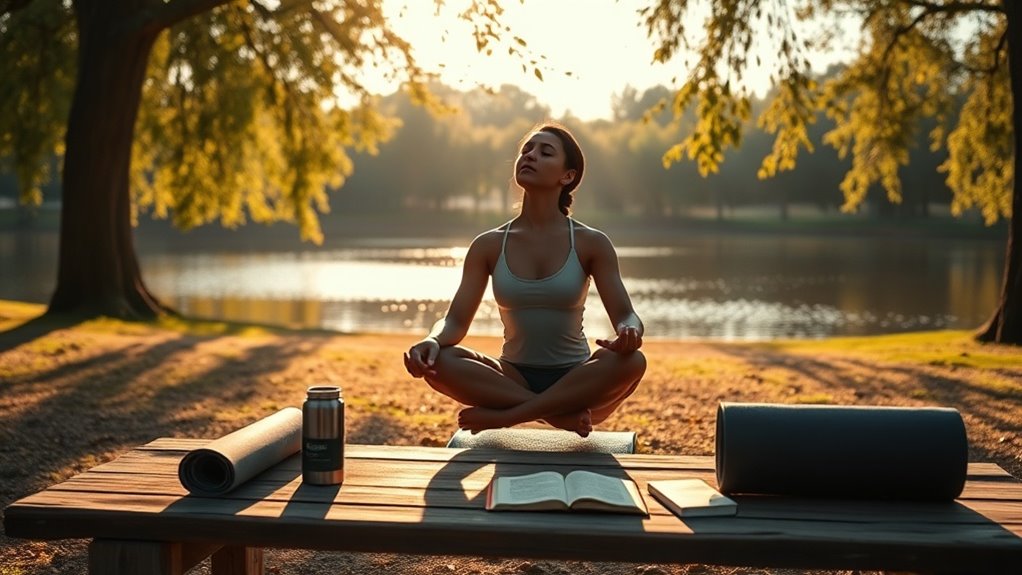
When stress hits, a simple, reliable tool can be right at your fingertips: a relaxation technique you can take anywhere. You don’t need a quiet room or fancy gear—you just need a quick routine you can perform in the moment. Start with your breathing patterns. Inhale through your nose for a slow count of four, hold for a moment, then exhale through your mouth for a count of six. Repeat this cycle five times. You’ll notice your shoulders ease, your jaw unclench, and a sharper sense of clarity returning. The rhythm is yours to adjust, but the basic idea stays the same: controlled breathing calms your nervous system and creates space between stimulus and response.
Breathe, pause, and reset: a portable tool for steadier responses anytime.
Next, identify your stress triggers in the moment. When you notice tension creeping in, name it: is it a looming deadline, a noisy environment, or a difficult conversation? Naming the trigger reduces its grip and makes it easier to choose a next move. If you’re in a place where you can pause, take a brief breath check-in: how fast is your heart beating, where is the tightness, what thoughts are looping? Acknowledge these signals without judgment, then redirect your focus to the breathing pattern you practiced. This small shift can interrupt spiraling thoughts and restore your sense of control.
Ground yourself with a simple body scan. Start at the top of your head and slowly move downward, noting any areas of stiffness or unease. As you exhale, let each area soften a little more. If you discover residual tension in your shoulders or jaw, loosen them intentionally—drop the chin, roll the shoulders back, and release with the exhale. The goal isn’t perfect relaxation in every muscle, but a steady return to present-moment awareness. This awareness makes it easier to choose a constructive action rather than a reactive one.
Turn this into a portable practice by pairing the breathing patterns with an actionable cue. For example, whenever you hear a notification ping or feel a prick of anxiety, pause for a five-breath sequence and a quick body scan. You’ll begin to associate those everyday cues with a reliable reset. Over time, it becomes automatic, reducing how often stress triggers derail your momentum.
Finally, keep it practical and private. Practice the routine for a few minutes each day so it sits in your muscle memory. You’ll build a personal toolkit that travels with you, ready for use on buses, in meetings, or during a tense phone call. The technique remains simple, effective, and accessible, no matter where you are. With consistent use, you’ll notice not just calmer moments, but a steadier baseline that helps you respond thoughtfully to life’s pressures rather than react impulsively. You’ve got the power to reclaim balance, one breath at a time.
Frequently Asked Questions
How Long Does a Session Typically Take?
A typical session lasts about 5 to 10 minutes. You’ll start with a steady breathing rhythm, then notice your focus shift as tension loosens. If you only have a moment, aim for 3 minutes and progressively extend as you feel calmer. Keep it simple: inhale to four, exhale to four, and check in with your body. You’ll likely feel a little lighter, more centered, and ready to tackle what’s next.
Can This Help With Anxiety or Panic Attacks?
Yes, this can help with anxiety or panic attacks. When you try it, many users report calmer breaths and a quicker return to steady thinking. Imagine 60 seconds of focused practice, and you often notice a shift in your nervous system. Two word idea 1: grounding moments. Two word idea 2: paced breathing. You’ll stay present, reduce tension, and feel more in control, with clear, actionable steps you can use anytime.
Is It Suitable for Kids and Teens?
Yes, it’s suitable for kids and teens, with supervision and adjustments. You’ll want simple, gentle guidance and shorter sessions. Use Calming visuals to engage attention and Breathing patterns to steady nerves during moments of stress. Start slow, 2–3 minutes, then build as they’re comfortable. Check in about feelings afterward, praise effort, and keep it optional. If anxiety spikes, pause, breathe together, and revisit later. Seek professional help if concerns persist.
Do I Need Any Equipment or Apps?
You don’t need gear or apps to start. Mindfulness basics are simple: breathe, notice, return. Equipment optional—use your own quiet space, or none at all, if that helps you focus. You’ll feel calmer as you practice, one moment at a time. If you want a nudge, a timer can help, but you can also just rely on breath cues. Stick with it, and you’ll learn to calm carrying you through daily moments.
Can I Practice While Driving or Exercising?
Yes, you can practice some safe, simple techniques while driving or exercising, but only with safety in mind. For driving, keep it subtle—focus on Guided Relaxation or breath awareness when stopped, not while moving. For workouts, use brief, controlled Focused breathing between sets. Prioritize Meditation safety by avoiding complex methods mid-activity. If you feel dizzy or distracted, stop and resume afterward. Stay hydrated, and listen to your body, adapting as needed.